About me
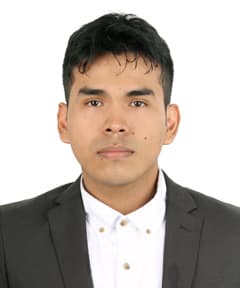
I am an MSc student in Artificial Intelligence at Universidad de Ingeniería y Tecnología (UTEC) in Lima, Peru. My research focuses on computer vision, 3D perception, and generative modeling of urban scenes.
For my MSc thesis, SparseCity, I am developing a sparse, hierarchical, point-based generative model for 3D urban environments. I am exploring diffusion models and flow matching to address the memory demands of dense volumetric representations.
I also collaborate with Artificio on Barranco3D, studying how drone, vehicle, and pedestrian viewpoints contribute to urban reconstruction. My background includes a B.S. in Electronics Engineering from Universidad Tecnológica del Perú (2025) and training in Industrial Mechatronics at TECSUP (2018).
I am interested in research internships and collaborations in 3D vision and generative modeling, with the goal of pursuing a PhD. Beyond research, I have coordinated localization and simulation work for Kamayuc's Mars rover team and taught robotics at Playtec.
Research
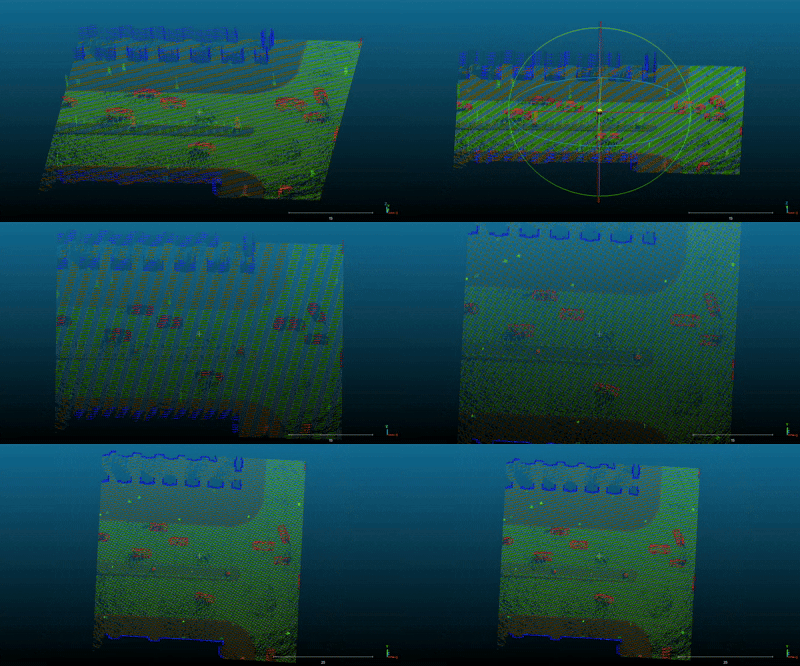
SparseCity: A Point-Based Model for Sparse Large-Scale Semantic Scene Generation
Developing a sparse, hierarchical, point-based generative model for 3D urban scenes as my MSc thesis at UTEC. The research explores diffusion models and flow matching to address the memory demands of dense volumetric representations. Manuscript in preparation.
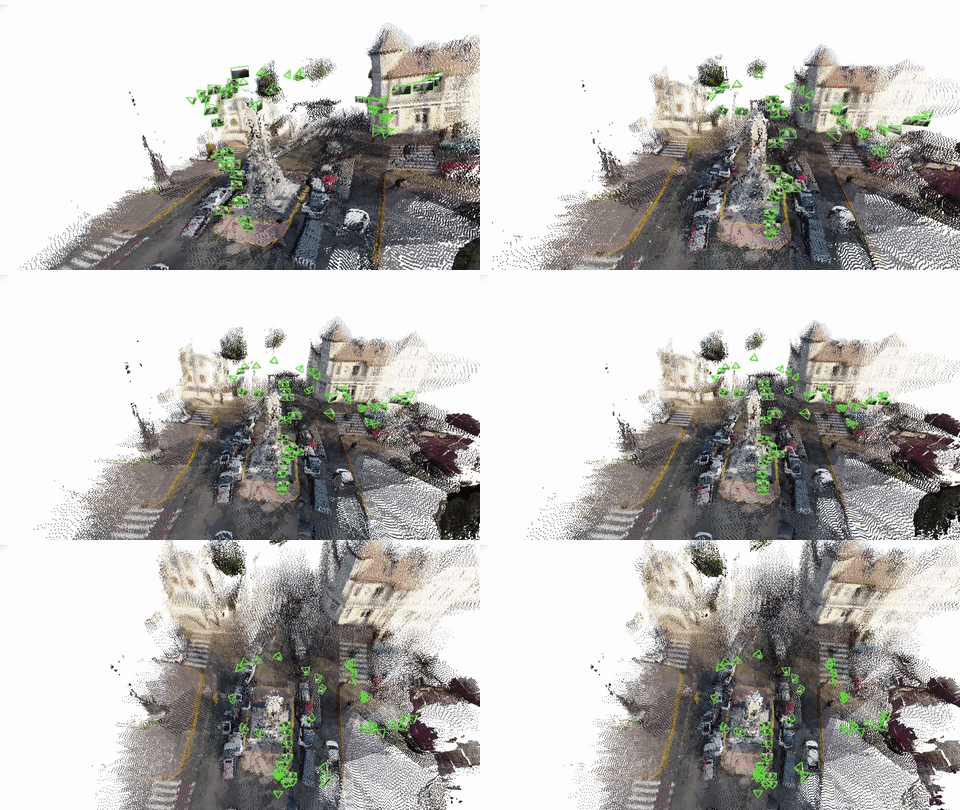
Barranco3D: Quantifying contribution of heterogeneous platforms in 3D urban reconstruction
Investigating how drone, vehicle, pedestrian, and Mapillary imagery contribute to urban 3D reconstruction in collaboration with Artificio. The work uses COLMAP as a common baseline and platform ablations to quantify the contribution of each viewpoint. Manuscript in preparation.
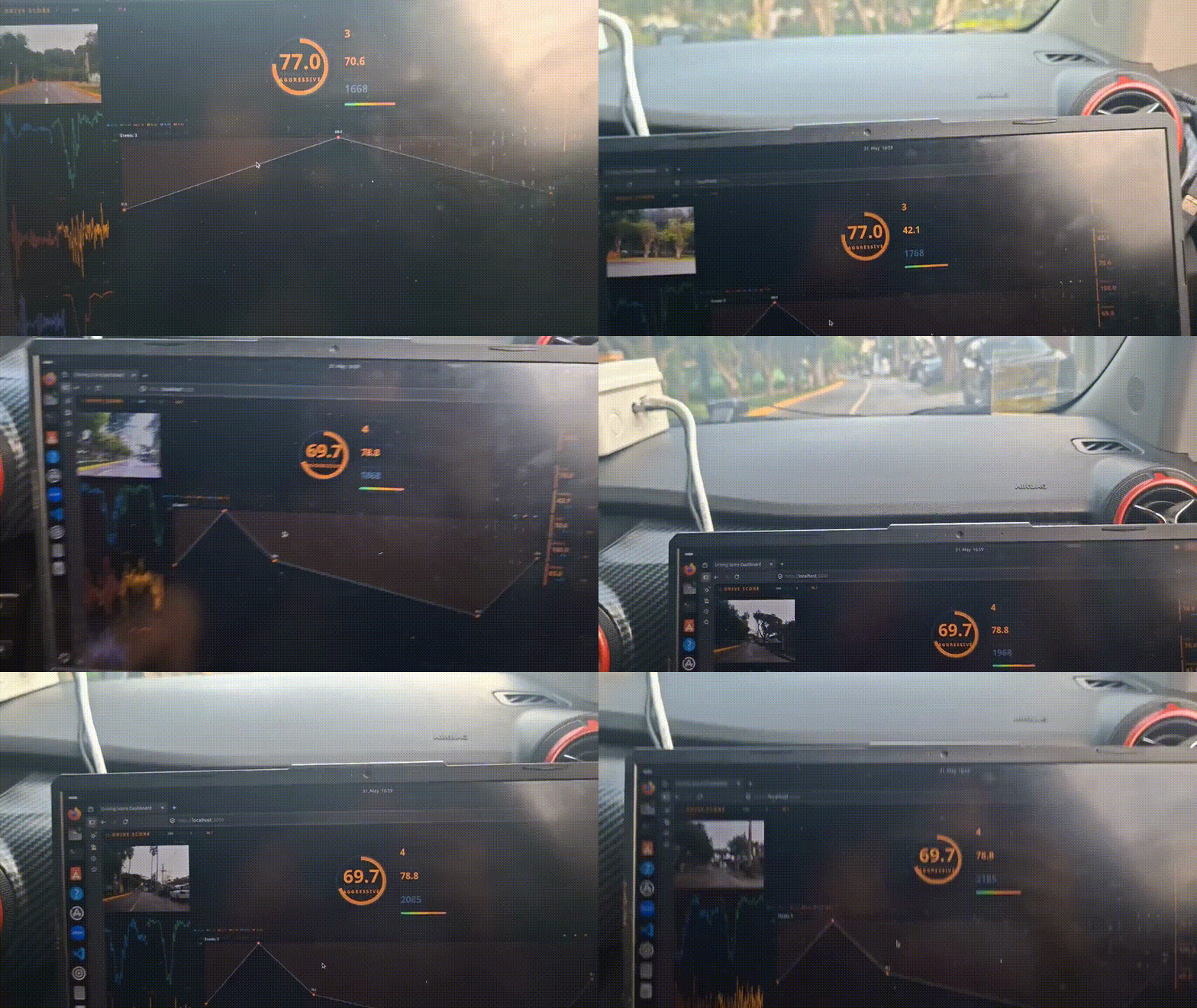
Real-Time Embedded IMU-Based System for Aggressive Driving Scoring
A real-time embedded system that uses IMU data to score aggressive driving behavior. The project connects my interests in sensor-based perception and embedded systems; the presentation and source code are available below.
Projects
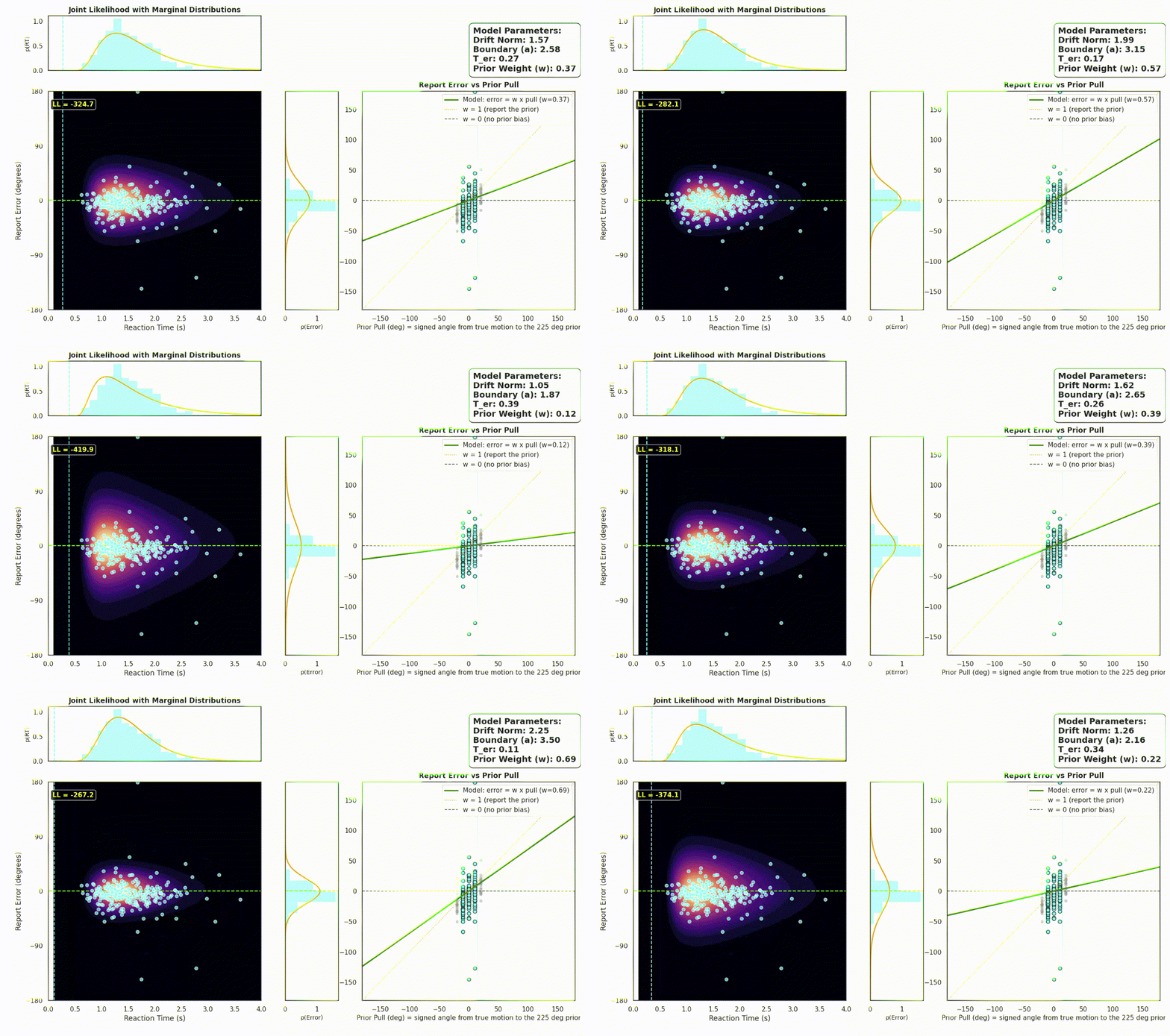
Prior Expectations and Sensory Evidence in Perceptual Estimation
Investigated how prior expectations and sensory evidence influence perceptual estimation using a Bayesian observer model. Completed as a computational neuroscience project at Neuromatch Academy.